A guide to sleep-product materials
What Sets Naturepedic Apart: Materials, Certifications, and Design Choices
A mattress is a layered landscape: fibers, foams, springs, fabrics, and finishes working together beneath the quiet surface of sleep. Understanding what those layers are made of—and what a label does or does not certify—can help shoppers look beyond broad promises and compare products with greater confidence.
Start with the construction, not the slogan
Naturepedic is a sleep-products brand commonly associated with organic materials and ingredient disclosure. Those themes offer a useful starting point for research, but they are not a substitute for examining the specification of a particular mattress. A brand may make broad commitments across its range while individual models differ in materials, construction, certifications, and intended feel.
That distinction matters because a mattress is not one material. It is an assembly. A quilted cover may contain different fibers from the comfort layer beneath it; a support system may use metal coils; and an encasement, adhesive, or fire barrier may have its own composition. To understand a product, look for a layer-by-layer account rather than relying on a single phrase such as “natural,” “clean,” or “organic.”
For each model, useful questions include: What is the cover made from? What sits immediately beneath it? How does the mattress provide support? Are there synthetic components? Are flame-retardant materials used, and if so, what are they? Does the manufacturer identify where materials come from or explain which independent standards apply?
The answers help turn a brand story into something more concrete. They also make it easier to compare products that use similar language but have very different internal designs.
A closer look at materials
Materials influence more than a mattress’s label. They affect its feel, resilience, weight, breathability, maintenance needs, and expected service life. The right balance depends on a sleeper’s preferences, the bed frame, and the way the mattress will be used.
Cotton and quilted covers
Cotton is often used in mattress covers and quilt layers. Its role depends on how it is woven, quilted, and combined with other components. A fabric description should identify the fiber and, where relevant, whether it is certified organic. Thread count can describe a textile’s construction, but it does not by itself establish the source of its fibers, the safety of every mattress component, or the performance of the finished product.
When comparing covers, check whether the description refers to the cover alone or to a larger portion of the mattress. A certification attached to a fabric or material should not automatically be read as certification of every component in the finished bed.
Latex comfort layers
Latex can provide a responsive, buoyant feel, though its character varies with its formulation and construction. Dunlop is one process used to make latex; product descriptions may also identify whether the material is organic and which certification, if any, applies. Ask whether the latex is a comfort layer, a support core, or a combination, and how thick it is.
These details are practical, not merely technical. A thin latex layer over coils will behave differently from a thicker, all-foam design. Shoppers with latex sensitivities should also seek clear information from the manufacturer and, when needed, consult an appropriate health professional. Material descriptions are not a substitute for individualized medical advice.
Wool and other natural fibers
Wool may be used in quilting or as part of a mattress’s fire-barrier design. In a blend, several fibers can contribute different qualities and textures. A label that names wool, alpaca, or cashmere, for example, tells only part of the story: buyers should check the amounts, the layer in which each appears, and whether the fibers are certified or otherwise documented.
“Natural” is a broad description, not a complete ingredient list. It does not explain how a material was processed, what other components accompany it, or whether the finished product has been assessed under a recognized standard. Specific disclosures are more useful than general assurances.
Coils and support systems
In a hybrid mattress, coils and comfort layers share the work. Pocketed coils are individually enclosed, and their number, arrangement, wire characteristics, and zoning can vary between models. The word “coil” alone does not tell a shopper how firm a mattress will feel or whether it will suit a particular sleeping position.
Consider the support system alongside the comfort layers. A spring unit can offer a different kind of response from a solid foam core, while the quilting and upper layers shape the first impression when someone lies down. If possible, compare the written construction with an in-person trial, and review the maker’s guidance on firmness, weight limits, and compatible foundations.
What certifications can—and cannot—tell you
Certifications can help make complex claims easier to evaluate, but each one has a defined scope. A standard may address the agricultural origin of fibers, the processing of a material, chemical restrictions, or the conditions under which a particular component is made. It does not necessarily evaluate every aspect of a mattress or guarantee that a product will be comfortable, durable, or right for a particular sleeper.
Two names shoppers may encounter in discussions of organic bedding are GOTS and GOLS. In general, the Global Organic Textile Standard (GOTS) applies to textiles made with organic fibers and includes requirements that extend beyond the fiber itself. The Global Organic Latex Standard (GOLS) is associated with organic latex. For either standard, verify the certification’s current rules, the scope of the certificate, and whether the product or only a component is covered. Certification status can change, so current documentation matters.
Other labels may evaluate emissions or chemical criteria, while some are retailer programs or company commitments rather than independent certifications. Read the description carefully: who issues the mark, what does it assess, which materials are included, and is there a way to verify the claim? If the company uses a phrase such as “certified materials,” ask which materials and under which standard.
A practical certification check can be brief but systematic:
- Identify the certifier. Is it an independent organization with a published standard?
- Check the scope. Does the claim cover the complete mattress, a textile, latex, or another component?
- Look for current documentation. Certificates and product listings should be up to date and relevant to the exact model.
- Separate certification from performance. A materials standard does not establish comfort, support, durability, or suitability for every person.
- Read the exclusions. A standard may cover some ingredients or processes without addressing every part of a finished product.
When marketing language is broader than the documentation, treat the documentation as the more useful guide. The purpose is not to dismiss labels, but to understand what they actually mean.
Ingredient transparency as a design choice
Ingredient disclosure is more than a list of appealing materials. It is a way of making a complex object legible. A useful product description names components, explains their location in the mattress, and clarifies how the materials work together. Ideally, it also distinguishes verified certifications from general sourcing statements and identifies limitations where relevant.
Transparency can be especially valuable when a mattress combines natural and conventional materials. Hybrid construction, for instance, may bring together fibers, latex, and metal coils. That mixture is not inherently good or bad; it simply makes accurate descriptions more important. Shoppers should be able to see which materials are present instead of being left to infer the entire construction from a headline.
Look for the details that affect your own priorities. Someone focused on organic fiber may want documentation about the textile layers. Someone concerned about latex may want to know where it appears and how it is described. A person seeking a particular feel may care most about the thickness and arrangement of comfort layers. The best questions are specific to the decision at hand.
Design is the meeting point of materials and feel
Materials are only one side of a mattress. Design determines how those materials are arranged and how they respond as a system. A tall profile does not automatically mean a mattress is more supportive or durable; the important question is what each layer does. Likewise, “plush” and “firm” are useful descriptions, but their meaning can vary between manufacturers and bodies.
Think about the mattress in cross-section. The cover and quilting shape the surface. Comfort layers influence pressure relief and initial softness. Transition layers can help connect the surface to the support core. Coils or other core materials provide the primary support structure. The result depends on thickness, density, material properties, and the way layers interact—not on a single feature in isolation.
Edge support, motion transfer, temperature perception, and ease of movement may also matter. Some of these characteristics are influenced by the coil unit; others depend on foam, quilting, or the complete construction. Manufacturer descriptions can guide research, but individual experience varies. Reviews may reveal patterns, yet they are subjective and should not replace clear specifications or a trial when one is available.
Foundations deserve attention, too. A mattress placed on an incompatible or worn-out base may not perform as intended, and the foundation can affect the height and stability of the sleep system. Check the mattress maker’s support requirements, spacing recommendations, and warranty terms before pairing it with a frame or adjustable base.
Example: reading the construction of the Elysium Hybrid
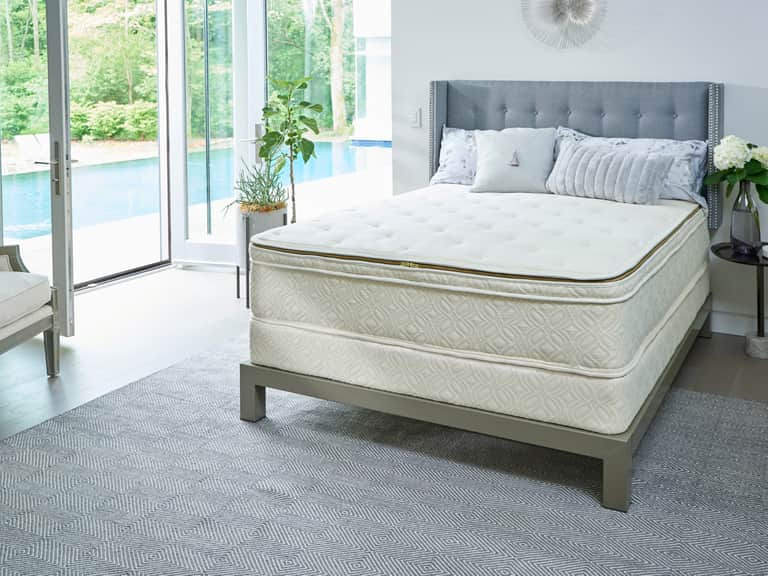
One example of how these questions can be applied is the Naturepedic Elysium Hybrid Organic Mattress. Its listed construction includes a 15-inch profile, two layers of wrapped coils totaling 12 inches, three inches of customizable organic Dunlop latex, and a quilted layer described as a blend of wool, alpaca, and cashmere. The product information also describes an organic sateen cover and says the mattress is made in the United States with domestic and imported components.
Those specifications give a reader a useful outline, but they should be read carefully. “Customizable” is a feature to clarify with the seller: ask what can be changed, how the options affect feel, and whether the configuration is available in the size being considered. A named fiber blend is a starting point for understanding the quilt, not a full account of every material in the mattress.
The product description refers to GOTS-approved materials. That wording should not be expanded into an assumption that every part of the finished mattress is certified under GOTS. Before relying on a certification claim, confirm what the current certificate covers and whether it applies to the complete product or particular materials. The same principle applies to any mattress, regardless of brand.
The listing says the mattress ships in multiple boxes and requires light assembly. Those are practical considerations that can matter as much as construction details: confirm delivery access, setup requirements, foundation compatibility, return terms, and warranty coverage. A detailed specification is most useful when paired with the everyday realities of getting the bed into a room and using it over time.
A practical comparison checklist
When comparing Naturepedic with other sleep products, put each mattress through the same set of questions. Consistency helps prevent vivid branding or a long feature list from overshadowing the facts that matter most.
- Construction: What are the layers, in order, from the cover to the support core?
- Materials: Which fibers, foams, latex, coils, barriers, and other components are identified?
- Proportions: Are layer thicknesses, fiber blends, or core details provided?
- Certifications: Which standards apply, who issued them, and what exactly is covered?
- Disclosure: Are sourcing and processing claims specific, or mostly broad marketing language?
- Comfort: Can you test the mattress, and what are the trial and return conditions?
- Support: Does the design and firmness suit your needs and preferred sleep position?
- Compatibility: Which foundation or frame is recommended, and what support does it require?
- Care and longevity: What maintenance is advised, and what do the warranty terms actually cover?
- Price and value: Does the construction, service, and documentation justify the cost for your priorities?
Write down answers before shopping if several people will share the decision. One person may prioritize a particular material, while another cares more about firmness, motion, or ease of getting in and out of bed. A clear list can turn a confusing set of options into a more focused comparison.
Read claims with curiosity, not cynicism
Mattress labels can be difficult to interpret because they combine technical vocabulary with emotional promises. A more grounded approach is to treat every claim as an invitation to ask a follow-up question. “Organic” prompts the question: which materials are certified? “Low-emission” prompts: tested by whom and under what protocol? “Natural” prompts: what is the full composition? The goal is not to assume that claims are false, but to give them a clear, verifiable meaning.
Also separate environmental or material preferences from personal comfort. A material can align with a shopper’s values and still feel unsuitable. Conversely, a mattress that feels comfortable may not meet someone’s preferences for sourcing or disclosure. A good decision weighs both dimensions rather than asking one to stand in for the other.
Sleep products are long-term household purchases, and their details are easy to overlook until they are delivered. Take time to read current specifications, confirm certification scope, and understand trial and return policies. If a description leaves an important question unanswered, contact the manufacturer or retailer and request a precise explanation in writing.
The takeaway
What sets a sleep product apart is not a single material or seal, but the relationship between construction, disclosure, verification, and design. Naturepedic’s emphasis on materials and transparency gives shoppers a framework for asking useful questions. The next step is to apply that framework to the exact model: map its layers, identify the scope of each certification, and judge comfort and support separately from environmental or ingredient claims.
In the end, the most informative label is the one that tells you precisely what it means. Look for named materials, clear construction details, current evidence for certifications, and language that distinguishes a component from the finished mattress. With those pieces in view, comparison becomes less like navigating a thicket of slogans and more like reading a well-marked trail—one layer, one claim, and one decision at a time.